
Introduction
Diagnostic musculoskeletal ultrasound is often discussed in terms of image quality and diagnostic accuracy. Clinicians frequently compare ultrasound to MRI and ask whether a particular pathology can be visualized reliably.
However, the most important question may not be whether ultrasound can identify pathology.
The more important question is:
How does ultrasound influence clinical decision-making?
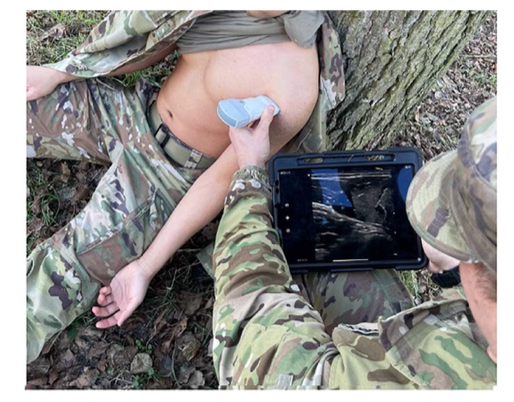
A recent study evaluating handheld musculoskeletal ultrasound in deployed physical therapists provides an interesting perspective. In environments where access to radiologists, orthopedic surgeons, and advanced imaging is limited, ultrasound served not only as a diagnostic tool but also as a clinical decision-support tool.
The findings have important implications for sports medicine clinicians working with athletes, military personnel, and active populations.
Why Point-of-Care Imaging Matters
Musculoskeletal injuries often require decisions to be made quickly.
Clinicians must determine:
Injury severity
Rehabilitation progression
Need for additional imaging
Activity modification
Return-to-sport or return-to-duty readiness
Traditionally, these decisions rely on clinical examination combined with radiographs or advanced imaging.
However, diagnostic ultrasound offers several advantages:
Real-time assessment
Portability
Low cost
No radiation exposure
Dynamic evaluation
Most importantly, ultrasound can provide immediate information at the point of care.
What the Study Found
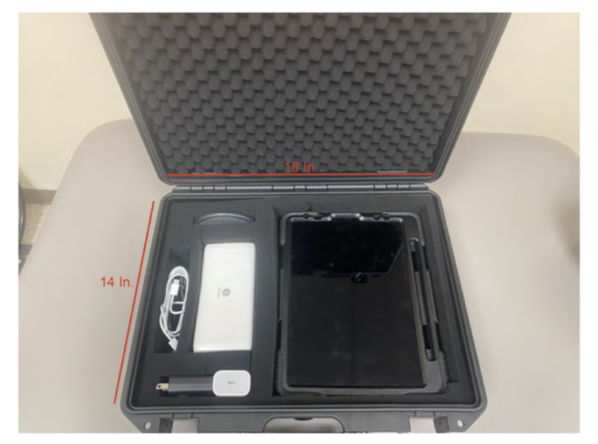
Two military physical therapists were trained in musculoskeletal ultrasound and deployed with handheld ultrasound devices for six months.
During deployment:
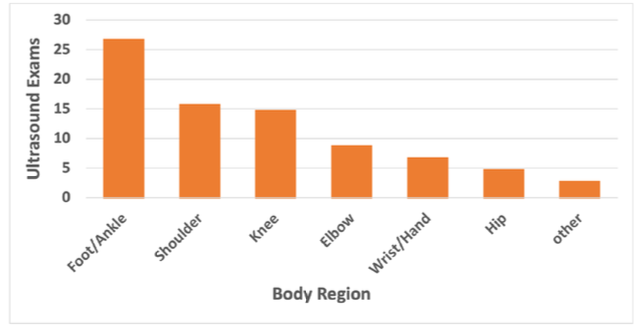
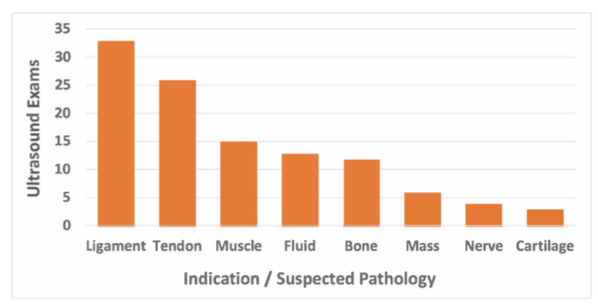
68 musculoskeletal ultrasound examinations were performed
Foot and ankle injuries represented the most common region scanned
Shoulder and knee injuries were the next most frequently evaluated regions
Ligament and tendon pathology represented the primary indications for imaging
Most notably, ultrasound altered clinical management in over half of all cases.
Clinicians used ultrasound findings to:
Modify rehabilitation plans
Guide return-to-duty decisions
Determine need for specialist consultation
Support medical evacuation decisions
Improve patient communication
These findings suggest that the value of ultrasound extends beyond diagnosis alone.
Practical Sports Medicine Applications
The implications are highly relevant to sports medicine practice.
Consider the athlete presenting with:
Acute Achilles Injury
Ultrasound may help determine whether the injury represents:
Tendinopathy
Partial thickness tear
Complete rupture
This information directly influences referral patterns and rehabilitation planning.
Lateral Ankle Injury
Ultrasound can assist in evaluating:
ATFL integrity
CFL involvement
Peroneal tendon pathology
Understanding tissue involvement helps guide loading strategies and return-to-play decisions.
Medial Elbow Pain
Dynamic ultrasound may identify:
Ulnar collateral ligament injury
Tendon pathology
Joint instability
These findings often influence activity modification and referral decisions.
Shoulder Injury
Ultrasound may assist with evaluating:
Rotator cuff pathology
Bursal irritation
Acromioclavicular joint injury
The ability to compare sides dynamically provides additional clinical information that static imaging cannot offer.
Ultrasound as a Decision-Support Tool
One of the most important lessons from this study is that ultrasound should not be viewed simply as an imaging modality.
It functions as a clinical decision-support tool.
The information obtained may help clinicians:
Confirm working diagnoses
Rule out severe pathology
Monitor healing progression
Improve patient confidence
Guide rehabilitation progression
The goal is not necessarily to replace MRI or radiography.
The goal is to make more informed decisions closer to the point of care.
Challenges and Limitations
Ultrasound remains operator dependent.
Successful integration requires:
Anatomical knowledge
Image acquisition skills
Structured training
Ongoing mentorship
The clinicians in the study reported that additional training and experience were necessary for more complex diagnoses.
As with any imaging modality, ultrasound findings should always be interpreted within the context of the patient’s history, examination findings, and functional presentation.
The Future of Diagnostic Ultrasound
Portable ultrasound technology continues to improve.
As devices become more accessible and training pathways become more standardized, musculoskeletal ultrasound may play an increasingly important role in sports medicine practice.
The value of ultrasound is not simply that it allows clinicians to see pathology.
Its value lies in helping clinicians make better decisions sooner.
Conclusion
Diagnostic ultrasound is increasingly becoming part of modern musculoskeletal care.
While image acquisition remains important, the greatest benefit may be its ability to influence clinical decision-making.
Whether evaluating an Achilles rupture, monitoring rehabilitation progression, or helping determine readiness for return to activity, ultrasound provides real-time information that can support patient management.
In many situations, ultrasound is not simply an imaging tool.
It is a clinical decision-support tool.
Before interpretation comes acquisition.
Before acquisition comes anatomy.