Integrated ultrasound-informed dry needling training covering cervical through lumbar regions.
THE TRAINING
Built for your practice.
This self-paced online course integrates diagnostic ultrasound principles with anatomy-driven dry needling technique progression. Covers cervical, shoulder, elbow, hip, knee, ankle, and lumbar regions with safety-focused instruction and clinical integration strategies. Designed for licensed clinicians seeking advanced musculoskeletal practice.
A LOOK INSIDE
See how you will learn.
Preview a lesson topic, study an ultrasound image, and reveal an answer explanation.
ACTUAL LESSON / IMAGE PREVIEW
Ultrasound Physics for Intervention
Explore frequency selection, image settings, artifacts, and their relationship to needle visibility.
Full lesson available with course access.
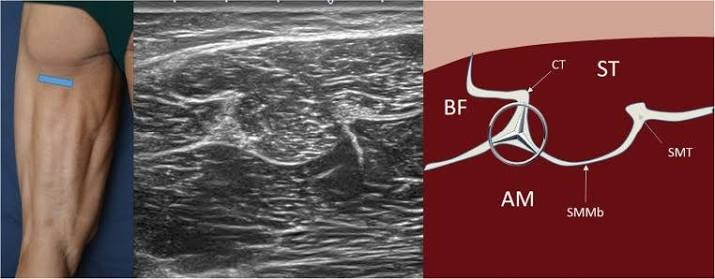
Connect the ultrasound image with probe placement and labeled anatomy.
Sample knowledge check — ultrasound fundamentals
Which parameter determines axial resolution?
A. Beam width
B. Frame rate
C. Spatial pulse length
D. Gain
Reveal answer and explanation
Correct answer: C. Spatial pulse length. Axial resolution = the ability to distinguish two structures that lie along the ultrasound beam’s path (front-to-back). It is determined by spatial pulse length (SPL) — shorter SPL = better axial resolution. Beam width affects lateral resolution, not axial. Frame rate and gain do not determine resolution.
Practice preview only. No sign-in required; this does not affect course progress.
We use essential storage for sign-in and your preferences. External article embeds and embedded Quizell quizzes may use third-party cookies. Choose what loads. Sign-in and course videos remain available.